
Containers & Special Vehicles Powder Coating for Containers and Special Vehicles: Building Long-Term Corrosion Protection into the System
Heavy Steel Equipment Needs More Than a Decorative Topcoat
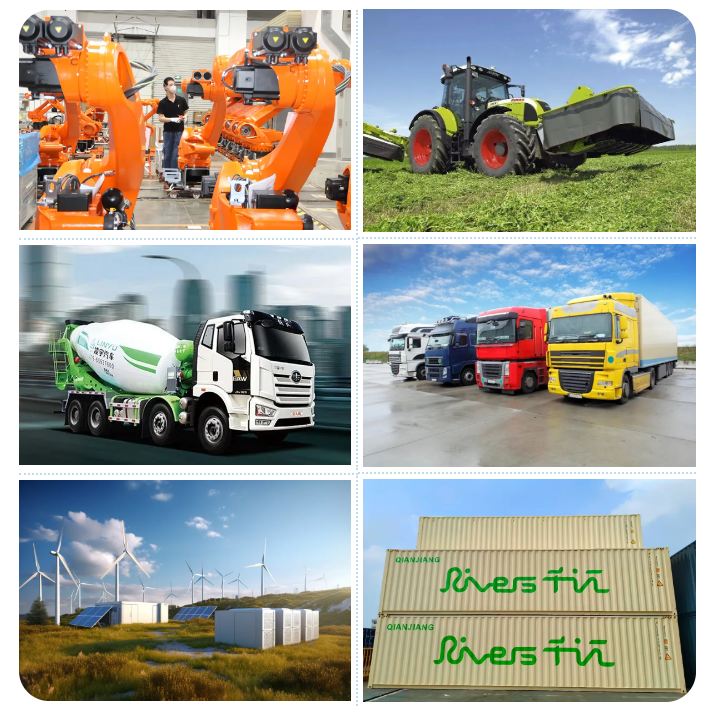
Containers, trailers, tank structures and special vehicles spend years exposed to rain, humidity, salt, road contaminants and mechanical damage.
For products operating around ports or coastal environments, corrosion risk becomes even more significant.
In these applications, powder coating cannot be selected purely by color and gloss.
The coating system must protect the steel substrate while also remaining practical for large-scale production.
Rivers Powder Coatings combines anti-corrosion primer technology, exterior topcoats and industrial manufacturing capability to support this type of demanding steel application.
Build Protection from the Substrate Up
For severe steel environments, a single decorative polyester layer may not provide sufficient long-term protection.
A more robust approach is:
Prepared Steel → Anti-Corrosion Powder Primer → Weather-Resistant Topcoat
Rivers' primer portfolio includes EX-P pure epoxy primer, EX-ZD zinc-rich epoxy primer and JH-P epoxy-polyester primer.
These options allow the primer system to be selected according to corrosion environment, project specification and cost requirements.
The primer focuses on protecting the steel interface.
The polyester topcoat provides outdoor weatherability, color stability and the required final appearance.
This layered strategy is especially relevant to projects designed around C4, C5-M or C5-H corrosion environments.

Surface Preparation Still Determines Success
Even the best primer cannot perform properly on poorly prepared steel.
Rust, oil, mill scale, welding residue and contamination can reduce adhesion and create weak points beneath the coating.
For high-corrosion applications, abrasive blasting to approximately Sa 2½ may be required, depending on the specification.
The surface must then remain clean until the primer is applied.
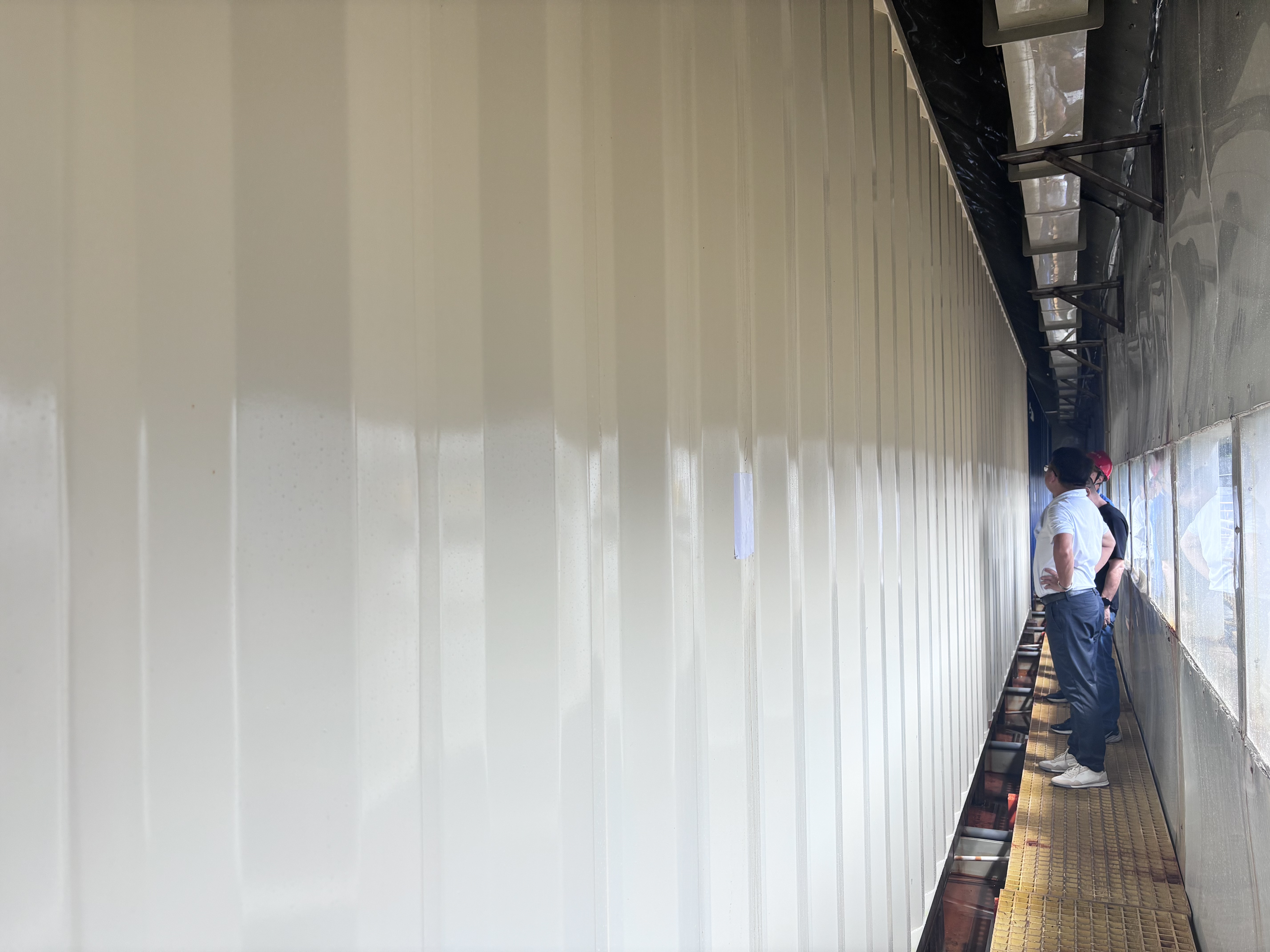
Rivers approaches heavy-duty corrosion protection as a system rather than a single product.
That means evaluating surface preparation, primer type, film thickness, curing and topcoat together.
Film Thickness Must Be Engineered, Not Guessed
For demanding steel applications, Rivers has developed systems using approximately:
EX-P pure epoxy primer: around 100 μm
plus
weather-resistant polyester topcoat: ≥60 μm
subject to project validation.
The important point is not that every project should use exactly this thickness.
It is that the primer and topcoat must each perform their intended function.
Adding more topcoat does not automatically compensate for poor primer protection.
Likewise, excessive primer thickness may create unnecessary cost or process problems.
A balanced coating system is more important than simply maximizing total film build.
Large Structures Need Good Application Behavior
Containers and special vehicles are not flat laboratory panels.
They include welded seams, brackets, recessed channels and sharp edges.
These areas can be harder to coat because of electrostatic Faraday-cage effects.
They are also often the first places where corrosion begins.
Rivers therefore pays attention not only to salt spray performance but also to powder application characteristics.
Good charging, stable particle-size distribution and appropriate gun settings can help improve coverage across complex steel geometry.
For demanding projects, production-line trials can be used to optimize spraying parameters before large-volume supply.
Corrosion Testing Is Important—but Only One Part of Performance
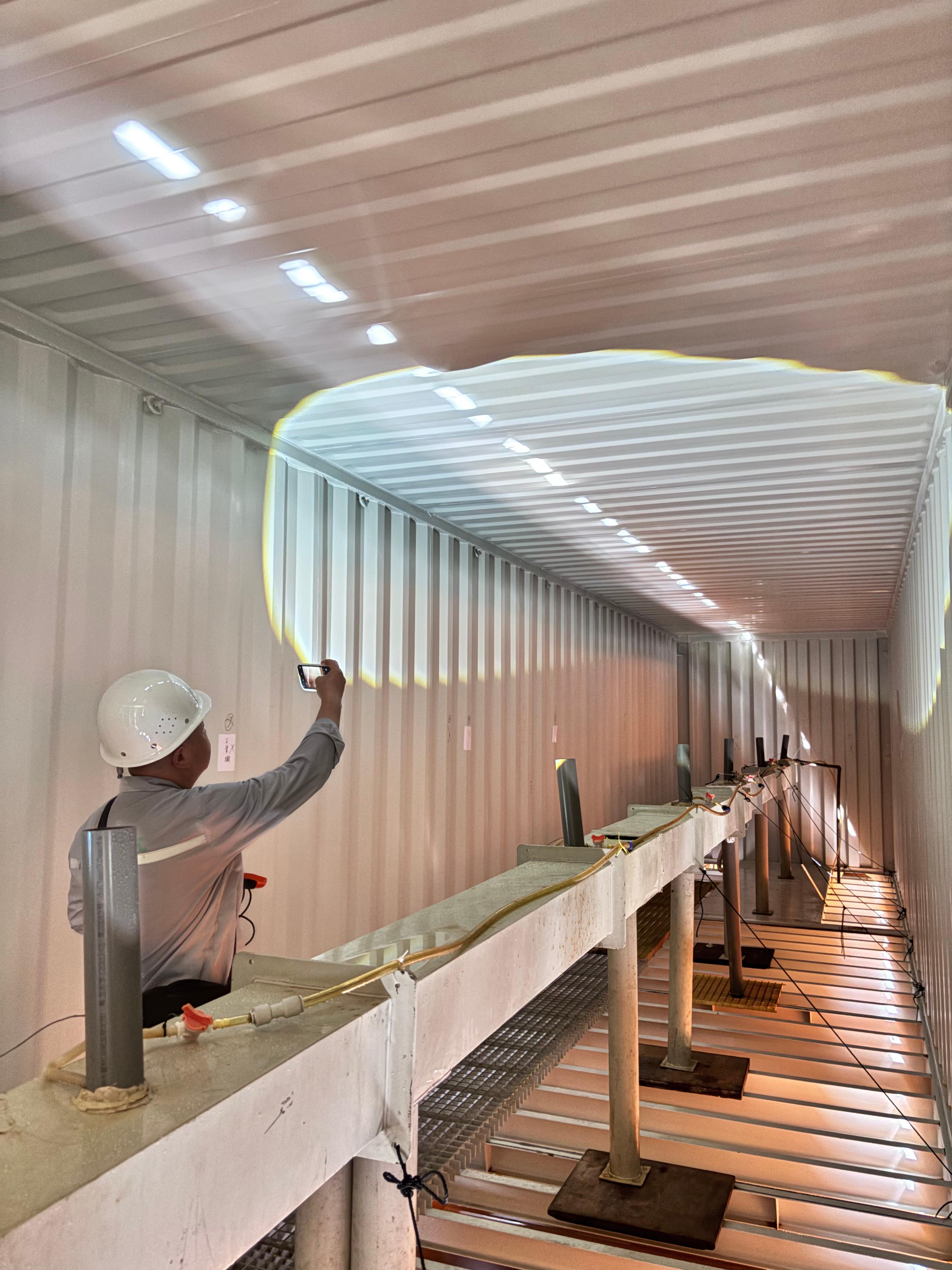
Salt spray testing is frequently used to compare anti-corrosion systems.
Rivers has coating systems with performance references reaching approximately 1,000–2,000 hours, depending on the coating structure and defined test conditions.
These results provide useful qualification data.
But real-world service performance also depends on surface preparation, edges, mechanical damage, assembly design and actual exposure environment.
That is why Rivers also works around ISO 12944 C3/C4/C5-M/C5-H protection concepts rather than reducing every corrosion discussion to one salt spray number.
Industrial Experience Matters
Rivers has practical experience in container and special-vehicle applications, including cooperation with CIMC-related projects.
This gives Rivers experience not only with product formulation but also with the realities of high-volume industrial coating.
Container and special-vehicle manufacturers need stable batches, efficient application and reliable supply.
Rivers' annual powder coating capacity exceeds 100,000 tons, supported by multiple manufacturing bases and more than 100 production lines.
For customers, this means heavy-duty technical products can also be supported at commercial scale.
Why Rivers for Heavy-Duty Steel Applications
Rivers combines three things that matter to industrial customers:
anti-corrosion product depth, application experience and production capacity.
The company can support customers from primer selection through to topcoat matching, test documentation and mass production.
For overseas projects, Rivers can also provide English TDS/SDS, technical recommendations and project-specific coating solutions.
This reduces the risk of qualifying a technically capable coating only to discover later that the supplier cannot support consistent commercial volumes.
Call to Action
Working on a container, trailer, special vehicle or heavy steel project? Contact Rivers with your substrate, corrosion category, production process and target specification for coating-system recommendations, samples, TDS/SDS and quotations.

Rivers (Qianjiang) Group
Zhaoqing Qianjiang High-Tech Materials Technology Corporation
Guangdong Huajiang Powder Technology Co., Ltd.
Shandong Qianjiang Powder Technology Co., Ltd.
Guangdong Wesdon Rivers Powder Paints Scientifc Research Co., Ltd.
Zhaoqing Qianjiang Coating Co., Ltd.
Zhuhai Zhengdong Chemicals Co., Ltd.
Zhongshan Yonghan Industrial Additives Co., Ltd.
Guangdong Honglang Technology Co., Ltd.
WhatsApp:+86 150 1171 7323
Mail:global@riversqj.com
Address:
Guangdong Huajiang Powder Technology Co., Ltd.
No. 27 Jianshe Road, Dawang High tech Zone, Zhaoqing, Guangdong Province


