
Powder Coatings for Alloy Wheels: High-Gloss Finishes, Durability and Advanced Surface Design
1. Why Alloy Wheel Coatings Require More Than an Attractive Finish
Alloy wheels are among the most visually distinctive components of a vehicle. Their appearance contributes directly to vehicle styling, perceived quality and brand identity.
From high-gloss black and silver metallic to premium bronze, diamond-cut effects and transparent candy finishes, wheel manufacturers are continually developing new surface designs to meet changing market preferences.
However, an attractive finish is only part of the requirement.
Automotive wheels operate in demanding environments. They are exposed to road moisture, temperature fluctuations, brake dust, cleaning chemicals, stone impacts and mechanical abrasion.
A wheel coating must therefore combine decorative performance with appropriate durability and corrosion protection.
For automotive manufacturers, wheel producers and aftermarket brands, the challenge is to achieve the desired appearance while maintaining consistent quality across repeated production batches.
This requires careful selection of coating materials, layer structures and application processes.
Powder coatings can play an important role in these systems, particularly as primers, decorative basecoats and selected transparent finishes.
2. Understanding Multi-Layer Wheel Coating Systems
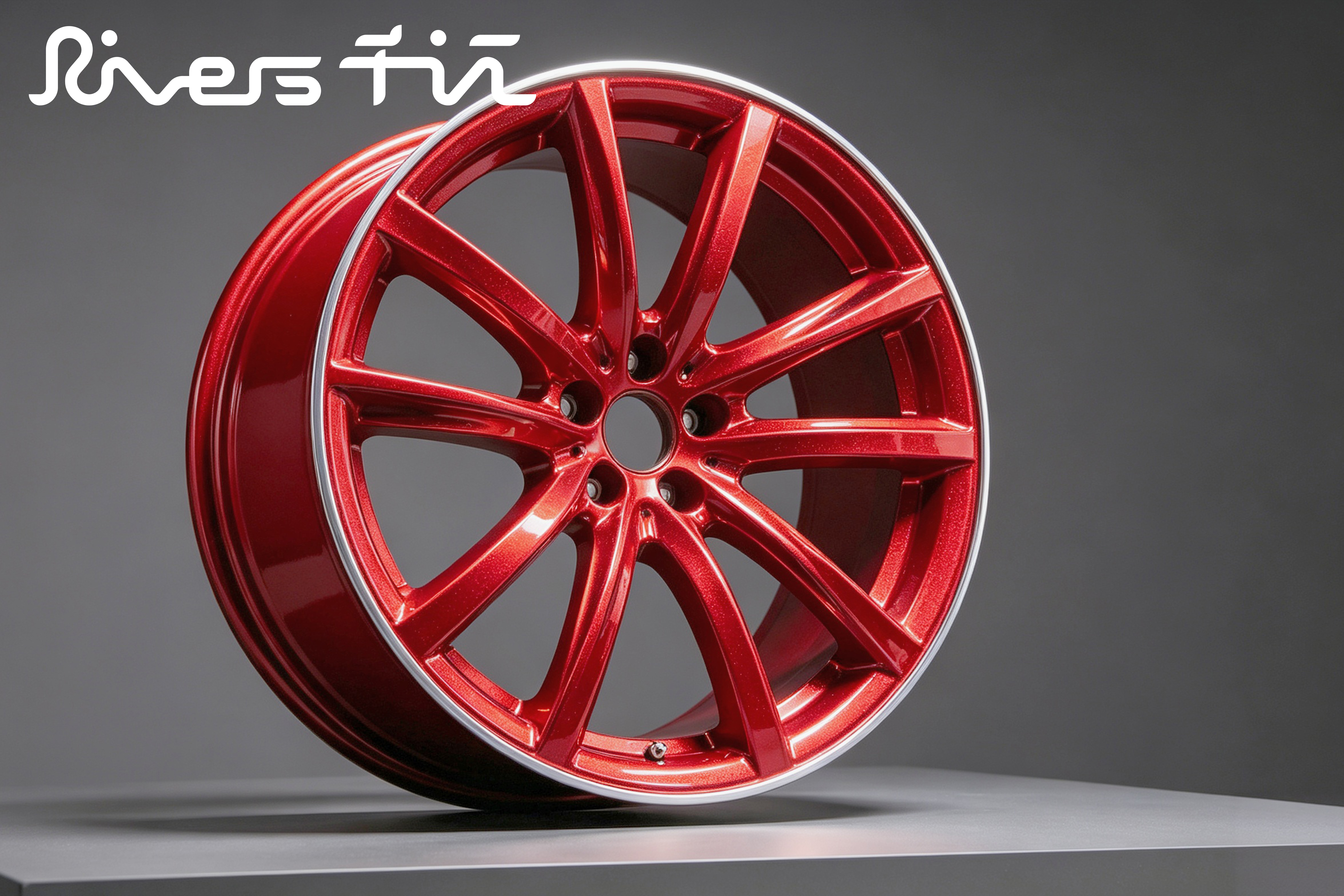
Unlike many conventional industrial metal products, premium alloy wheels frequently use multi-layer coating systems.
The appropriate structure depends on the wheel substrate, manufacturing process, appearance requirements and applicable performance specifications.
Powder Primer: Building the Protective Foundation
A powder primer may be used to support adhesion, surface coverage and corrosion protection.
For aluminium wheels, proper pretreatment is essential before coating application.
The primer must be compatible with the subsequent coating layers and the intended curing process.
Its performance should be evaluated as part of the complete wheel coating system rather than as an isolated product.
High-Gloss Powder Basecoat: Creating Surface Depth
High-gloss powder basecoats provide a smooth foundation for selected decorative wheel finishes.
Black and other dark basecoats are particularly relevant when manufacturers want to create visual depth beneath metallic or transparent layers.
Surface smoothness, gloss uniformity and coating compatibility are important considerations.
A high-gloss basecoat may look excellent as a laboratory sample but still require optimization for wheel geometry, application equipment and actual production conditions.
Metallic and Decorative Finishes
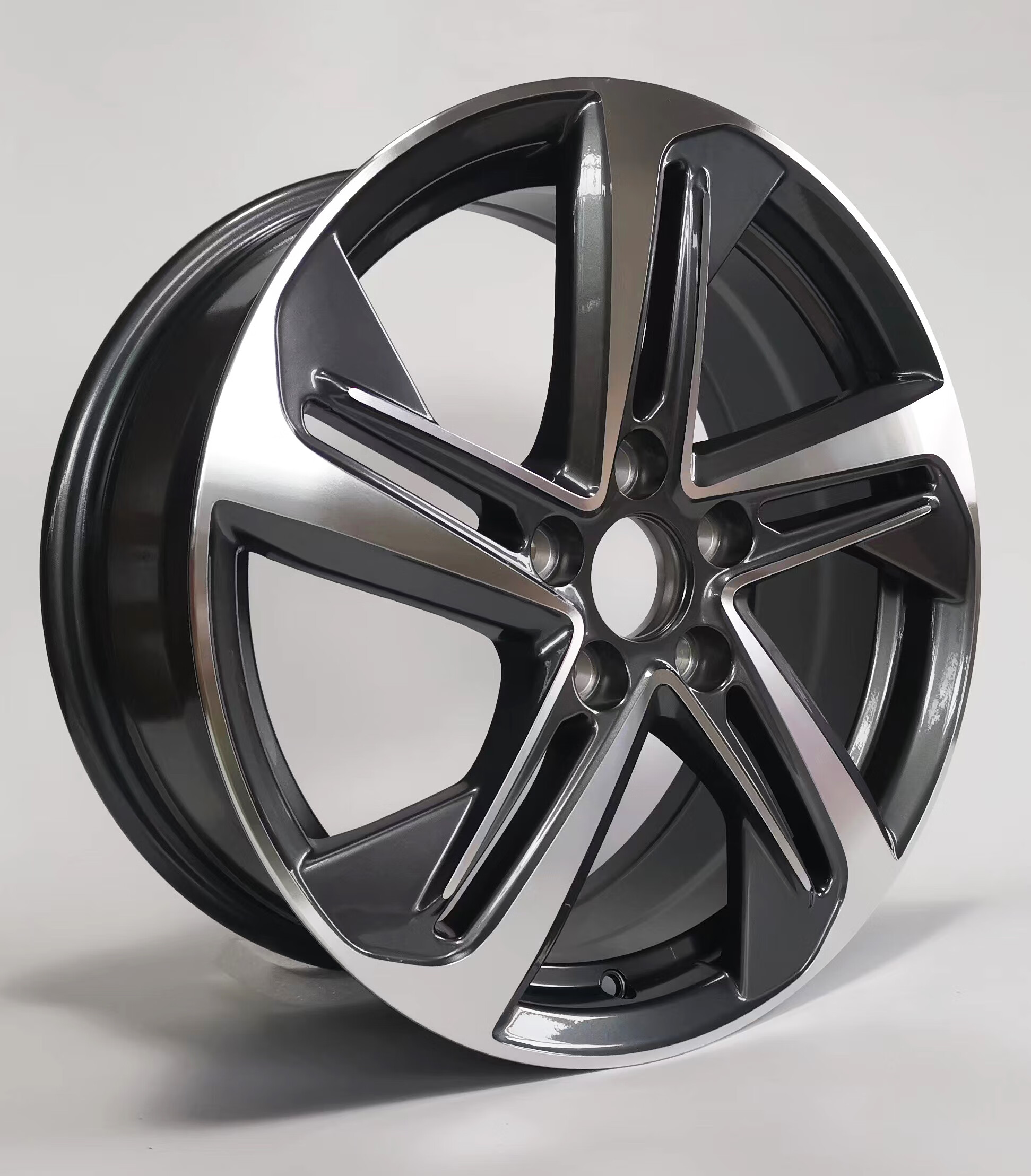
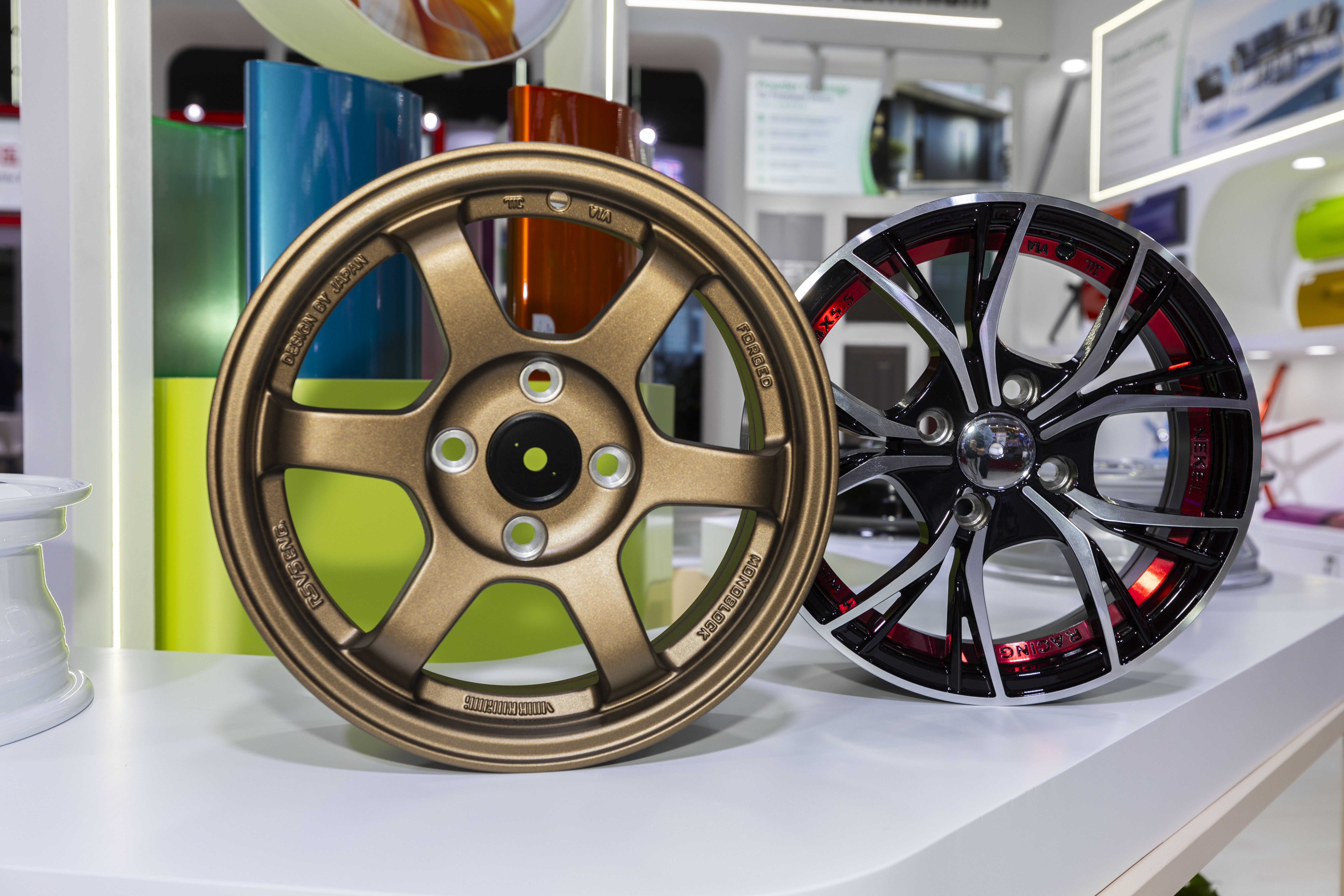
Metallic silver, bronze, graphite and other decorative effects can help differentiate wheel designs.
The final appearance depends on pigment selection, coating structure, film thickness and application parameters.
For more sophisticated designs, manufacturers may combine a decorative base layer with a transparent finish.
Acrylic Powder Clear Coat
Selected acrylic powder clear coats can be considered for wheel coating systems requiring transparent protection and a particular visual appearance.
The clear layer may contribute to gloss, appearance depth and protection of the underlying decorative finish.
However, the suitability of an acrylic clear coat must be confirmed through system-level testing, including compatibility with the basecoat and the required automotive performance specifications.
3. Candy Finishes and Premium Wheel Appearance
Candy finishes are particularly attractive in premium and customized wheel applications.
Unlike conventional solid colors, a candy effect often relies on a transparent colored layer applied over a reflective or carefully selected base.
This creates visual depth and a distinctive appearance that can change with lighting and viewing angle.
Candy red, blue, bronze and other transparent effects can be used to develop differentiated wheel designs.
However, producing these finishes consistently requires careful process control.
Transparent layer thickness can significantly influence color intensity.
Variations in the underlying basecoat may also change the final appearance.
For manufacturers, the challenge is not simply producing one impressive sample.
It is reproducing the approved finish across different wheel designs, production batches and application conditions.
This makes physical reference samples, controlled film thickness and production-line validation essential.

4. Durability Requirements for Automotive Wheel Coatings
Automotive wheel coatings must be evaluated against the requirements of their intended market and customer.
Depending on the specification, relevant testing may include adhesion, impact resistance, chemical resistance, humidity exposure and accelerated corrosion testing.
Resistance to wheel-cleaning chemicals and environmental contamination may also be important.
For aluminium wheels, corrosion protection requires particular attention to pretreatment quality, coating coverage and exposed or damaged areas.
Diamond-cut wheels present additional challenges because machined surfaces and coating interfaces may influence corrosion behavior.
A coating system that performs well on a flat laboratory panel may behave differently on a complex wheel.
For this reason, wheel manufacturers should validate coatings on representative production components.
Testing should also reflect the applicable automotive or customer-specific requirements.
5. From Sample Approval to Stable Wheel Production
Wheel coating development involves several connected stages.
First, the manufacturer defines the required appearance, including color, gloss, metallic effect and surface texture.
Next, the coating supplier develops candidate formulations and prepares physical samples.
Once the appearance is approved, the complete coating structure must be evaluated.
Important variables include pretreatment, spray parameters, film thickness, oven profile and actual metal temperature.
Multi-layer systems also require attention to intercoat adhesion and compatibility between curing cycles.
The final stage is validation under actual production conditions.
For wheel manufacturers, successful development means achieving both the desired appearance and repeatable manufacturing performance.
6. Rivers: Automotive Wheel Coating Development Experience
Established in 1996, Rivers Powder Coatings has developed powder coating products for automotive components, industrial metal products and decorative applications.
Automotive wheels represent an important product-development direction within Rivers' industrial coating portfolio.
Rivers has experience developing high-gloss wheel basecoats, decorative finishes and acrylic clear powder coating systems for relevant automotive applications.
These capabilities allow Rivers to discuss wheel finishing as a coordinated coating system rather than a single color specification.
For manufacturers developing premium wheel designs, this approach is particularly valuable.
A visually distinctive finish often requires several compatible layers, each contributing to the final appearance and performance.
High-Gloss Basecoat and Transparent Finish Development
Rivers' wheel-related product development includes high-gloss basecoat solutions and selected acrylic transparent powder systems.
These product directions provide a technical foundation for evaluating decorative wheel finishes, including designs requiring enhanced gloss and visual depth.
Specific combinations must be confirmed through compatibility testing and actual wheel trials.
The objective is to help manufacturers identify coating options that can satisfy both design expectations and production requirements.
7. 100 Dedicated Sample-Development Lines for Customized Finishes
Wheel manufacturers frequently need to compare several appearance options before approving a new design.
A customer may request a warmer bronze tone, a deeper black basecoat or a different transparent color effect.
Rivers operates 100 dedicated sample-development lines, supporting customized color, gloss and surface-finish development.
For automotive wheel projects, these resources can support the preparation and comparison of alternative finishes before production trials.
This is particularly useful for customers developing premium decorative products, where small visual differences can influence final design approval.
Rather than treating sampling as a separate activity, Rivers can connect appearance development with the subsequent technical evaluation process.
For overseas buyers, this provides a more structured route from initial design references to physical samples and production validation.
8. Why Wheel Manufacturers and Distributors Can Consider Rivers
For international wheel manufacturers and automotive coating distributors, Rivers offers several relevant capabilities.
Automotive application experience: Rivers has experience developing powder coatings for automotive components and wheel-related applications.
Multi-layer coating development: High-gloss basecoats, decorative powder finishes and selected acrylic clear systems provide options for evaluating coordinated wheel coating structures.
Customized sampling resources: The company's 100 dedicated sample-development lines support the comparison of colors, gloss levels and decorative effects.
International technical support: Rivers can provide English Technical Data Sheets, Safety Data Sheets and available product-specific test information to support customer evaluation.
Together, these capabilities help buyers approach coating development as a complete project.
The process begins with the desired wheel appearance, continues through sample development and technical validation, and progresses toward repeatable commercial production.
For distributors, this creates opportunities to offer customized wheel finishes rather than competing exclusively on standard industrial colors.
For manufacturers, it provides a technical development partner capable of discussing both decorative design and production requirements.
9. Conclusion: Premium Wheel Design Requires Reliable Coating Development
The automotive wheel market continues to demand distinctive finishes, refined surface quality and dependable manufacturing performance.
High-gloss basecoats, metallic effects, candy finishes and selected transparent powder systems offer valuable possibilities for wheel design.
However, successful implementation depends on the compatibility of the complete coating system and its performance under actual production conditions.
With its automotive coating development experience, customized sampling resources and international technical support, Rivers helps manufacturers evaluate powder coating solutions for premium wheel applications.
Great wheel design begins with appearance. Reliable wheel finishing requires the right coating system.
Call to Action
Developing a new alloy wheel finish or evaluating an alternative powder coating supplier?
Contact Rivers with your wheel substrate, reference sample, target appearance, coating structure and performance requirements.
Our team can support customized finish development, high-gloss basecoat selection, transparent powder coating evaluation and available English technical documentation.
Rivers Powder Coatings — Advanced Finishes for Automotive and Industrial Applications.

Rivers (Qianjiang) Group
Zhaoqing Qianjiang High-Tech Materials Technology Corporation
Guangdong Huajiang Powder Technology Co., Ltd.
Shandong Qianjiang Powder Technology Co., Ltd.
Guangdong Wesdon Rivers Powder Paints Scientifc Research Co., Ltd.
Zhaoqing Qianjiang Coating Co., Ltd.
Zhuhai Zhengdong Chemicals Co., Ltd.
Zhongshan Yonghan Industrial Additives Co., Ltd.
Guangdong Honglang Technology Co., Ltd.
WhatsApp:+86 150 1171 7323
Mail:global@riversqj.com
Address:
Guangdong Huajiang Powder Technology Co., Ltd.
No. 27 Jianshe Road, Dawang High tech Zone, Zhaoqing, Guangdong Province


