
Powder Coating for High-Speed Coil Aluminium: What Matters When the Line Runs at 30–120 m/min?
Coil Coating Changes the Rules of Powder Application
Most powder coating applications involve individual workpieces hanging from a conveyor: aluminium profiles, furniture frames, electrical cabinets or automotive components.
Pre-coated aluminium coil is different.
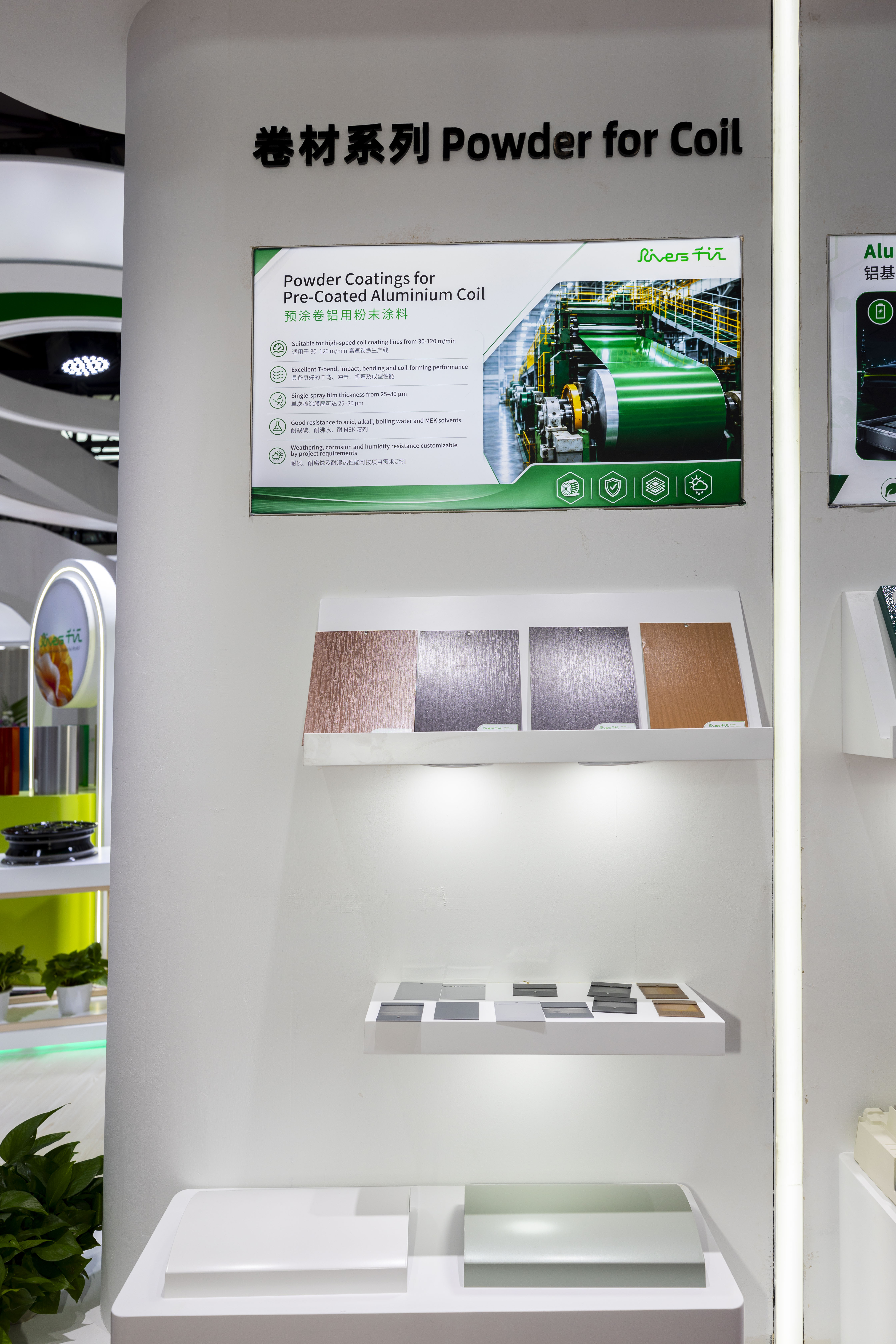
Instead of coating separate parts, a continuous aluminium strip moves through pretreatment, powder application and curing at high speed. Rivers has worked with pre-coated coil applications operating at approximately 30–120 m/min, creating a very different technical challenge from conventional powder coating lines.
At these speeds, even a small variation in powder delivery, film build or curing response can affect a large quantity of material within minutes.
For coil manufacturers, the key question is therefore not simply whether a powder can cure.
It is whether the powder can apply, flow, cure and remain visually consistent within a very short and tightly controlled production window.
Fast Lines Need Fast and Predictable Curing
Powder coatings require sufficient thermal energy to melt, flow and complete their curing reaction.
On a conventional component line, relatively long oven residence times may be available. A high-speed coil line has much less flexibility.
The coating formulation must therefore be selected around the actual line configuration, including strip thickness, oven length, line speed and peak metal temperature.
This is important because oven-air temperature is not the same as substrate temperature. The aluminium strip itself must reach the thermal conditions required by the powder.
If the curing window is too slow for the line, the coating may leave the oven under-cured. This can reduce adhesion, mechanical performance and chemical resistance.
If the formulation reacts too quickly, flow and leveling can be compromised before the surface has developed properly.
The objective is a controlled balance between melt, flow and cure.
Film Thickness Becomes a Cost and Process Variable
Powder coating is often associated with relatively high film builds. Coil applications require a more precise approach.
For Rivers' pre-coated aluminium coil projects, practical single-coat film thickness can fall within approximately 25–80 μm, while a range around 30–50 μm is often a useful starting point depending on the required performance and finish.
Why does this matter?
On a continuous coil line, every additional micron is multiplied across a very large coated area.
An unnecessarily thick film increases powder consumption and coating cost. Excessive thickness can also influence appearance and downstream forming behavior.
A film that is too thin, however, may reduce hiding power, surface uniformity or protection.
The most economical coating is therefore not necessarily the powder with the lowest price per kilogram. It is the system that achieves the required appearance and performance at a controlled and repeatable film build.
Surface Uniformity Is Especially Visible on Coil
Continuous aluminium sheet creates large, uninterrupted surfaces.
That makes appearance defects easy to see.
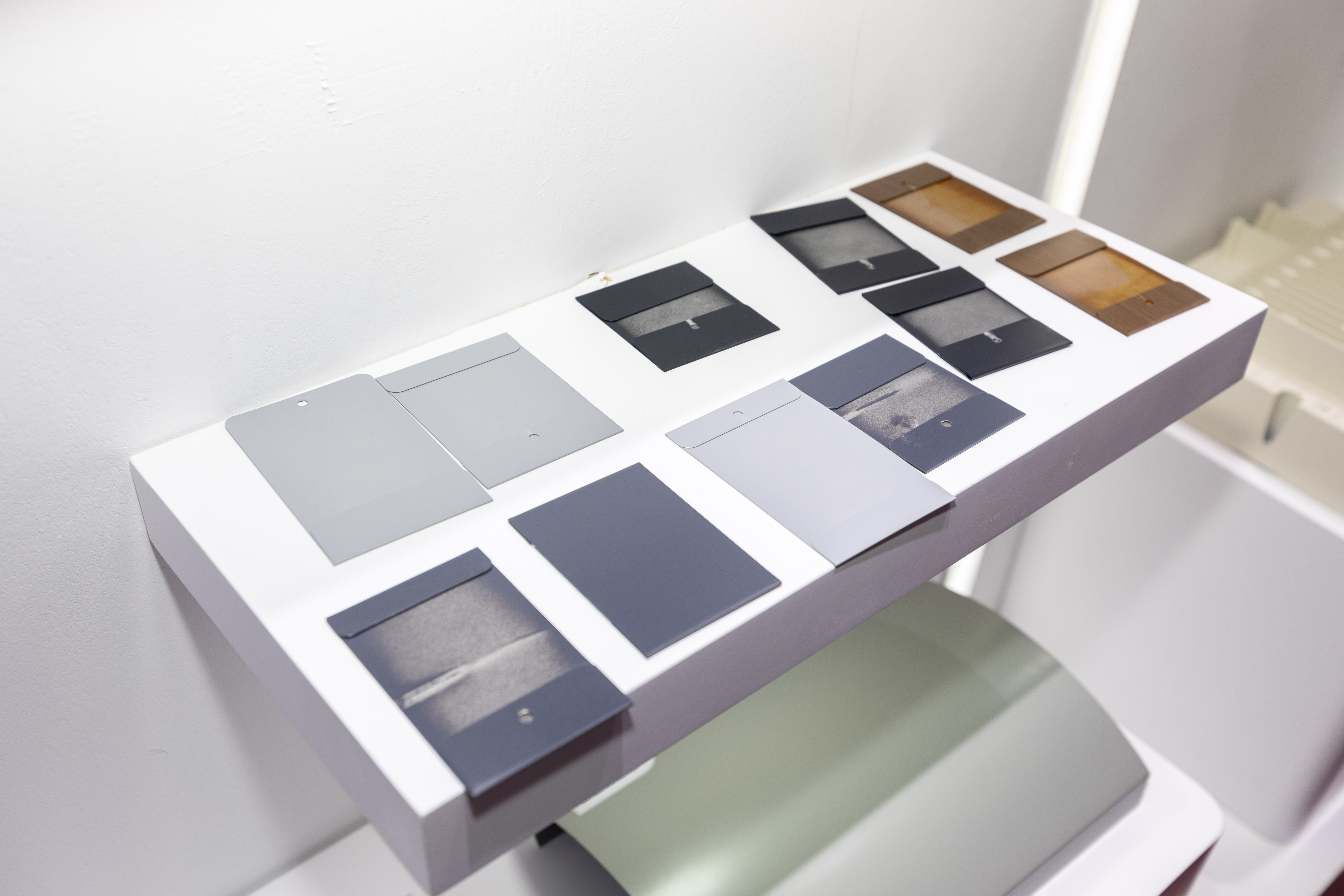
Gloss variation, orange peel, pinholes, contamination and inconsistent color that might be less noticeable on a complex industrial component can become obvious on a broad coated strip.
Powder particle-size distribution, electrostatic behavior and melt flow therefore require careful control.
For decorative applications, color consistency becomes equally important. If the coated coil is later cut or formed into panels that are installed next to each other, batch or within-coil variation can become visible in the final product.
Rivers combines formulation development with color measurement, sample preparation and production quality control to reduce these risks before commercial supply.
The Final Forming Process Must Be Considered
Coating the aluminium strip is not necessarily the end of the manufacturing process.
Pre-coated coil may subsequently be cut, bent, stamped or roll-formed into finished components.
This means the coating must provide not only appearance and adhesion on a flat panel, but also sufficient flexibility for downstream fabrication.
A coating that performs perfectly on a static laboratory panel can behave differently when the aluminium is bent around a tight radius.
For this reason, Rivers recommends evaluating the complete manufacturing route:
Aluminium Coil → Pretreatment → Powder Application → Curing → Cooling → Cutting / Forming → Finished Product
Mechanical requirements should be defined during coating development rather than discovered after the coil has entered commercial production.
Weatherability Depends on the Final Application
Pre-coated aluminium can be used across many industries, and not every application requires the same weathering performance.
Interior decorative panels may prioritize appearance, flexibility and cost efficiency.
Exterior building components require significantly greater resistance to sunlight and weathering.
For architectural applications, Rivers can draw from its broader polyester technology platform, which includes products aligned with QUALICOAT Class 1, Class 2 and Class 3 performance levels as well as systems developed around AAMA 2603, AAMA 2604 and AAMA 2605 requirements.
The correct chemistry should be selected according to the final use of the coated aluminium—not simply according to the fact that it is being applied on a coil line.
Color and Special Effects Create New Opportunities
Powder-coated coil does not have to be limited to standard white or grey.
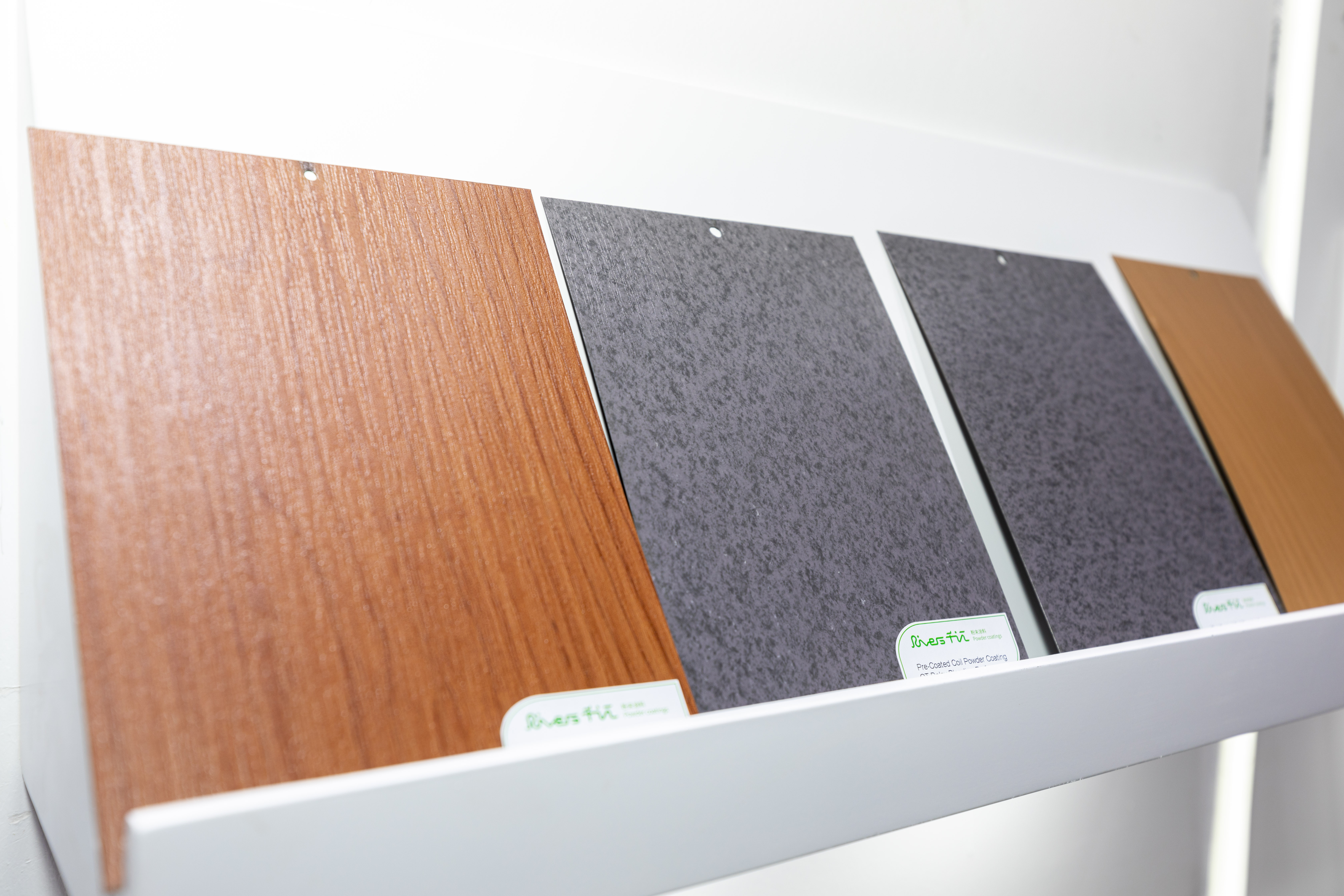
As powder application technology develops, manufacturers can explore matt surfaces, textures, metallic appearances and other decorative finishes.
However, increasingly complex effects also increase process sensitivity.
Metallic powder, for example, must maintain visual consistency across a continuously moving strip. Powder recovery and electrostatic parameters require careful management to prevent appearance drift.
Rivers has extensive metallic manufacturing capabilities, including more than 30 large-scale bonding lines, which can support the development of bonded metallic products where greater effect stability is required.
The feasibility of each finish should still be validated on the customer's actual coil equipment before full-scale production.
Why Sample Panels Alone Are Not Enough
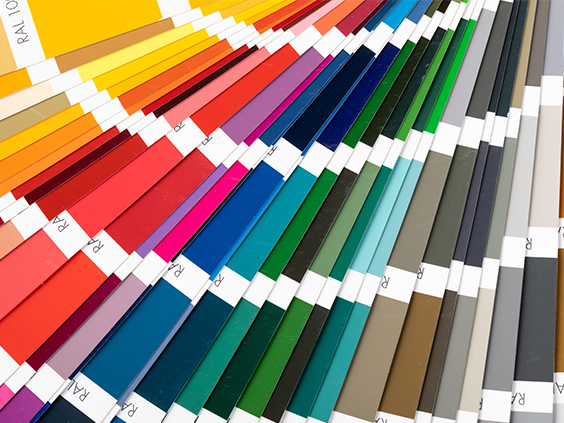
A conventional sprayed panel remains useful for screening color, gloss and basic coating properties.
For high-speed coil applications, however, successful laboratory testing is only the beginning.
The final validation must occur under conditions representative of the commercial line.
Rivers can work with customers through formulation evaluation, sample preparation and production trials, adjusting parameters according to line speed, curing response and required film thickness.
Once the coating has been validated, Rivers' manufacturing scale supports the transition to regular supply. The company operates more than 100 extrusion and grinding lines, with annual powder coating capacity exceeding 100,000 tons across its manufacturing network.
For continuous coil manufacturers, this combination of formulation capability and supply capacity is important because production interruptions can become extremely expensive on high-speed lines.
Designing Powder Around the Production Line
High-speed coil coating demonstrates an important principle in industrial powder coatings:
the formulation and the production process cannot be separated.
Line speed, film thickness, substrate temperature, curing window, appearance and downstream forming requirements must be considered together.
When these parameters are properly matched, powder coating can provide aluminium coil manufacturers with an efficient route to durable and differentiated surface finishes.
The objective is not simply to make the powder cure faster.
It is to create a coating system that remains stable at production speed.
Call to Action
Developing or optimizing a powder-coated aluminium coil line? Contact Rivers Powder Coatings with your line speed, aluminium thickness, oven conditions, target film thickness and final application. We can support product selection, customized samples, TDS/SDS, quotations, color matching and technical evaluation for production trials.

Rivers (Qianjiang) Group
Zhaoqing Qianjiang High-Tech Materials Technology Corporation
Guangdong Huajiang Powder Technology Co., Ltd.
Shandong Qianjiang Powder Technology Co., Ltd.
Guangdong Wesdon Rivers Powder Paints Scientifc Research Co., Ltd.
Zhaoqing Qianjiang Coating Co., Ltd.
Zhuhai Zhengdong Chemicals Co., Ltd.
Zhongshan Yonghan Industrial Additives Co., Ltd.
Guangdong Honglang Technology Co., Ltd.
WhatsApp:+86 150 1171 7323
Mail:global@riversqj.com
Address:
Guangdong Huajiang Powder Technology Co., Ltd.
No. 27 Jianshe Road, Dawang High tech Zone, Zhaoqing, Guangdong Province


