
Powder Coating Solutions for Energy Storage and Electrical Equipment: Insulation, Protection and Reliable Production
Electrification Is Creating New Requirements for Powder Coatings
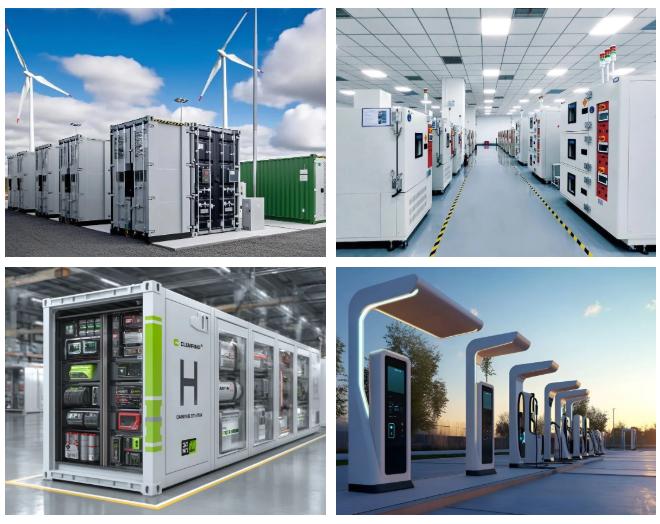
As energy storage, electric vehicles, charging infrastructure and electrical equipment continue to develop, powder coating is taking on responsibilities far beyond color and corrosion protection.
For a conventional metal enclosure, a coating may primarily need to provide an attractive surface and protect the substrate. For an energy storage system or electrical component, however, the coating can also become part of the component's electrical insulation and safety strategy.
Busbars, battery-related components, energy storage cabinets, motor parts and electrical enclosures can require very different combinations of dielectric performance, corrosion resistance, adhesion, mechanical durability and flame-retardant properties.
Rivers Powder Coatings develops specialized powder coating systems for these applications, combining its experience in industrial protection with functional coating technologies for the electrical and new-energy sectors.
Electrical Insulation: More Than Simply Applying a Thicker Film
One of the most important functions of coatings used on electrical components is insulation.
A typical example is a copper or aluminium busbar. The conductive metal must remain electrically isolated from adjacent components while maintaining reliable performance throughout assembly and service.
Simply increasing coating thickness is not always the best solution.
Insulation performance also depends on coating continuity, pinhole control, edge coverage, adhesion, curing and the geometry of the component. Bends, corners, holes and connection areas can create significant challenges during powder application.
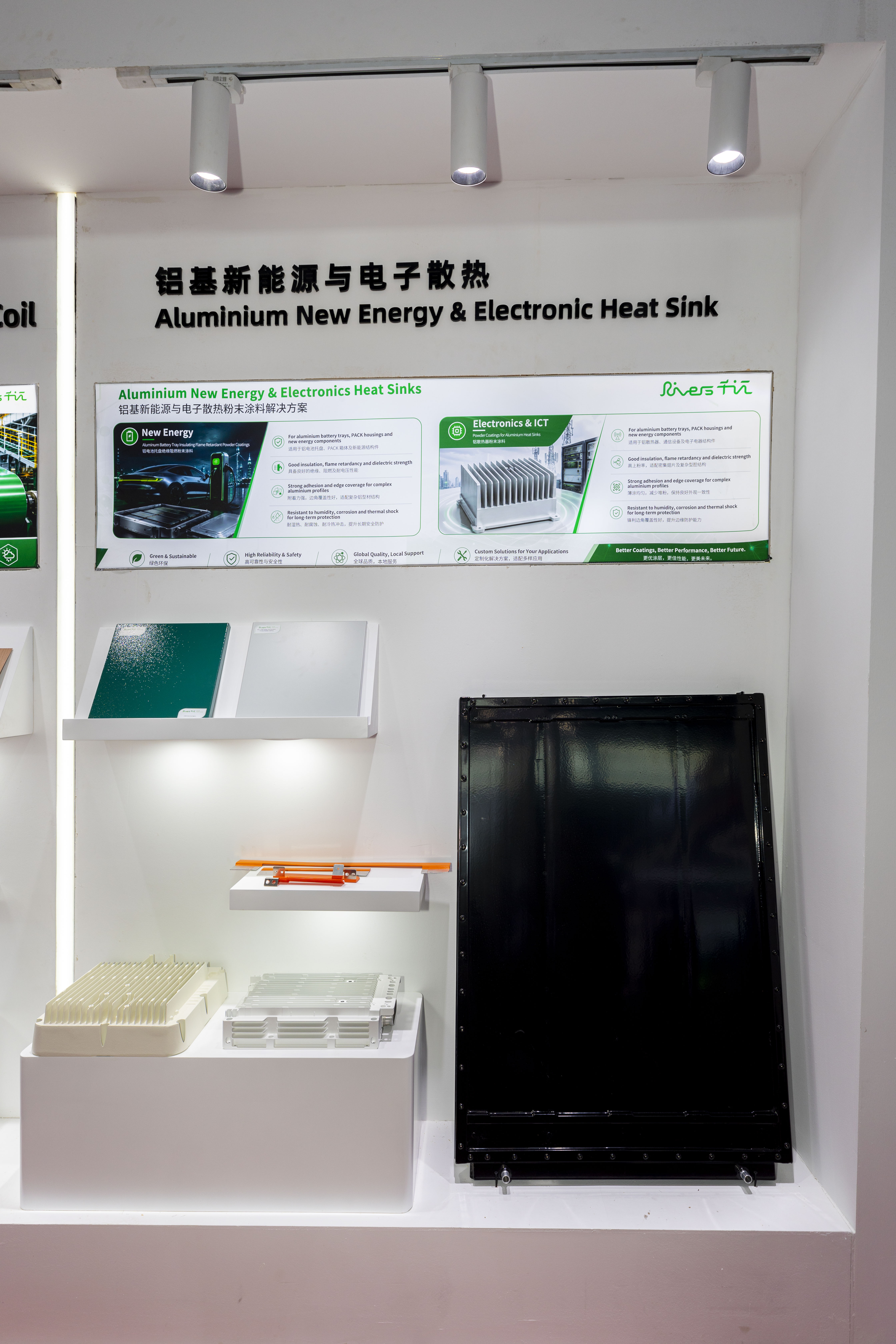
Rivers has developed functional insulating powder coatings for applications including busbars, motor stator and rotor components, magnetic components and other electrical parts.
Depending on the specific formulation and application conditions, Rivers' functional electrical coating systems can be designed around requirements such as high dielectric strength and low leakage current. Existing Rivers project materials include insulation performance references above 3,800 V, with leakage-current targets in the approximately 10–20 μA range for selected systems.
These figures are product- and test-condition-specific and should therefore be confirmed against the actual component specification rather than treated as universal values for every insulating powder.
Protection for Energy Storage Cabinets and Enclosures
Energy storage equipment introduces another challenge: the enclosure may contain sophisticated electrical systems while being installed outdoors for years.
The external coating therefore needs to address both appearance and environmental protection.
Depending on installation location, an energy storage cabinet can be exposed to UV radiation, rain, humidity, temperature cycling and industrial or coastal corrosion.
Rivers can combine outdoor polyester technology with its broader anti-corrosion portfolio to build coating solutions according to the required environment.
For more aggressive conditions, Rivers' industrial systems can be designed around corrosion categories including ISO 12944 C3, C4, C5-M and C5-H, with primer/topcoat structures available when a single-layer coating is not sufficient for the project's protection target.
This allows the coating specification to be matched to the installation environment rather than using the same powder for every energy storage project.
Flame-Retardant Powder Coatings for Safety-Critical Applications
Electrical equipment may also require improved flame-retardant behavior.
Rivers has developed specialized powder coating systems capable of meeting UL 94 V-0-level flame-retardant requirements for selected applications and formulations.
This capability is relevant to battery-related components, electrical assemblies and other products where the coating forms part of a broader fire-safety design.
However, flame-retardant performance should always be evaluated as part of the complete component system.
Substrate, coating thickness, curing conditions, component geometry and the applicable customer standard can all affect qualification. For international projects, Rivers can therefore work from the customer's technical specification and provide the corresponding product documentation and available test reports for evaluation.
Reliability Under Temperature and Humidity Cycling
Electrical and new-energy equipment rarely operates under constant laboratory conditions.
Components may experience high humidity, elevated temperatures, cold starts and repeated temperature changes throughout their service life.
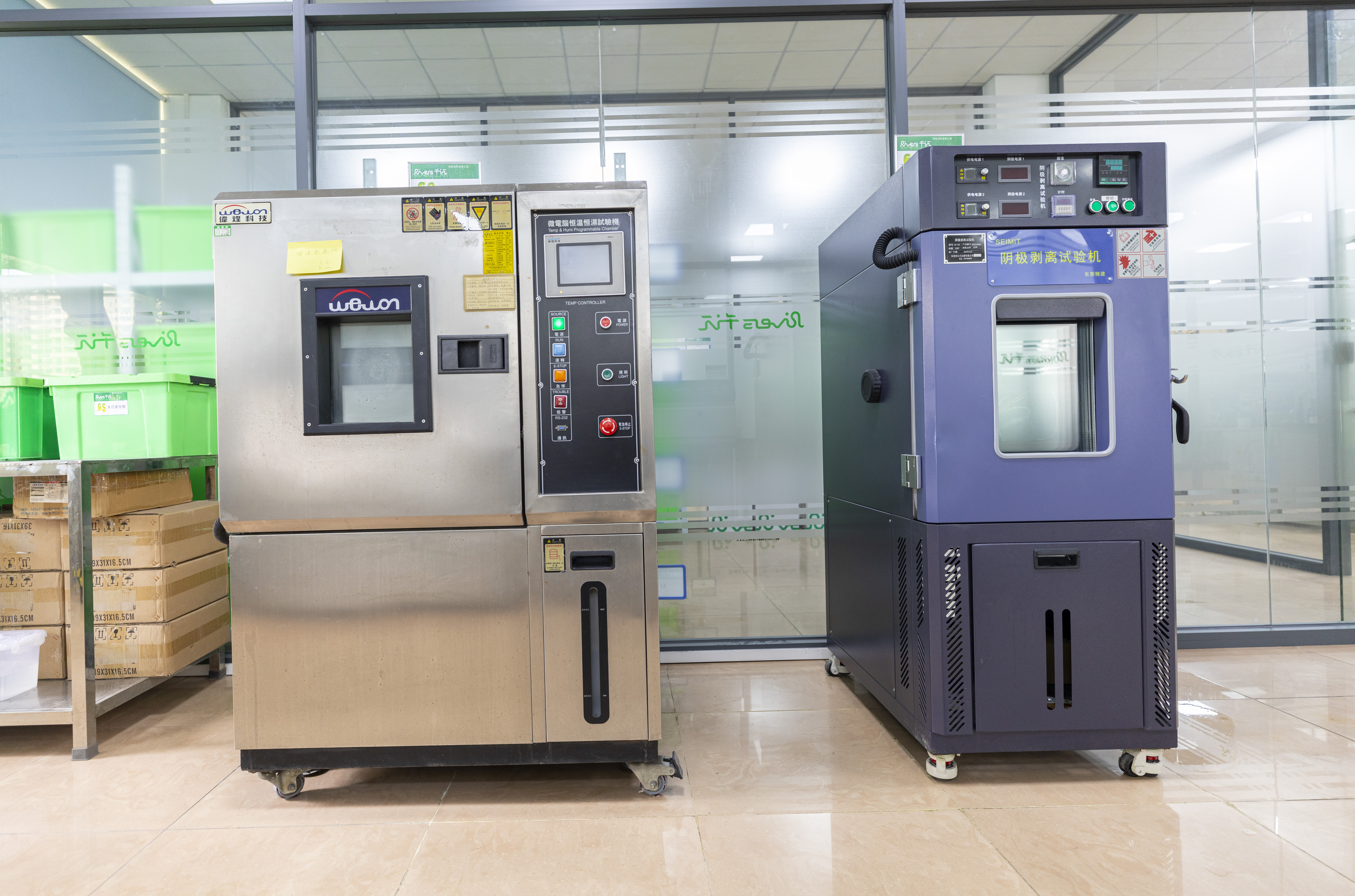
For selected functional coating systems, Rivers' development work includes demanding reliability evaluations such as 85°C / 85% RH testing up to 1,000 hours and thermal cycling between approximately −40°C and +85°C, depending on the specific product and customer requirement.
These tests are particularly useful when coatings are used on battery, energy-storage or electrical components where long-term insulation and adhesion stability are important.
The objective is not simply to achieve an impressive initial electrical reading.
The coating needs to retain its functional performance after environmental stress.
Application Control Is Critical for Functional Powders
Functional powder coatings place higher demands on the coating process than ordinary decorative powders.
Film thickness must be controlled carefully. Areas with insufficient coverage can reduce insulation or corrosion protection, while excessive thickness may affect assembly tolerances and production cost.
Complex components can also experience Faraday-cage effects around recesses, bends and corners.
Rivers therefore approaches these projects through a combination of formulation development and application validation.
The company has dedicated sample-development equipment and professional spraying simulation capabilities that allow engineers to evaluate powder behavior before a customer moves into volume production.
For overseas projects, Rivers can also provide recommendations covering spraying parameters, grounding, film thickness and curing conditions.
This is particularly valuable for manufacturers introducing powder coating to a component that was previously insulated or protected using another process.
From Energy Storage to Transformers and Power Distribution
Rivers' electrical coating experience is not limited to one application.
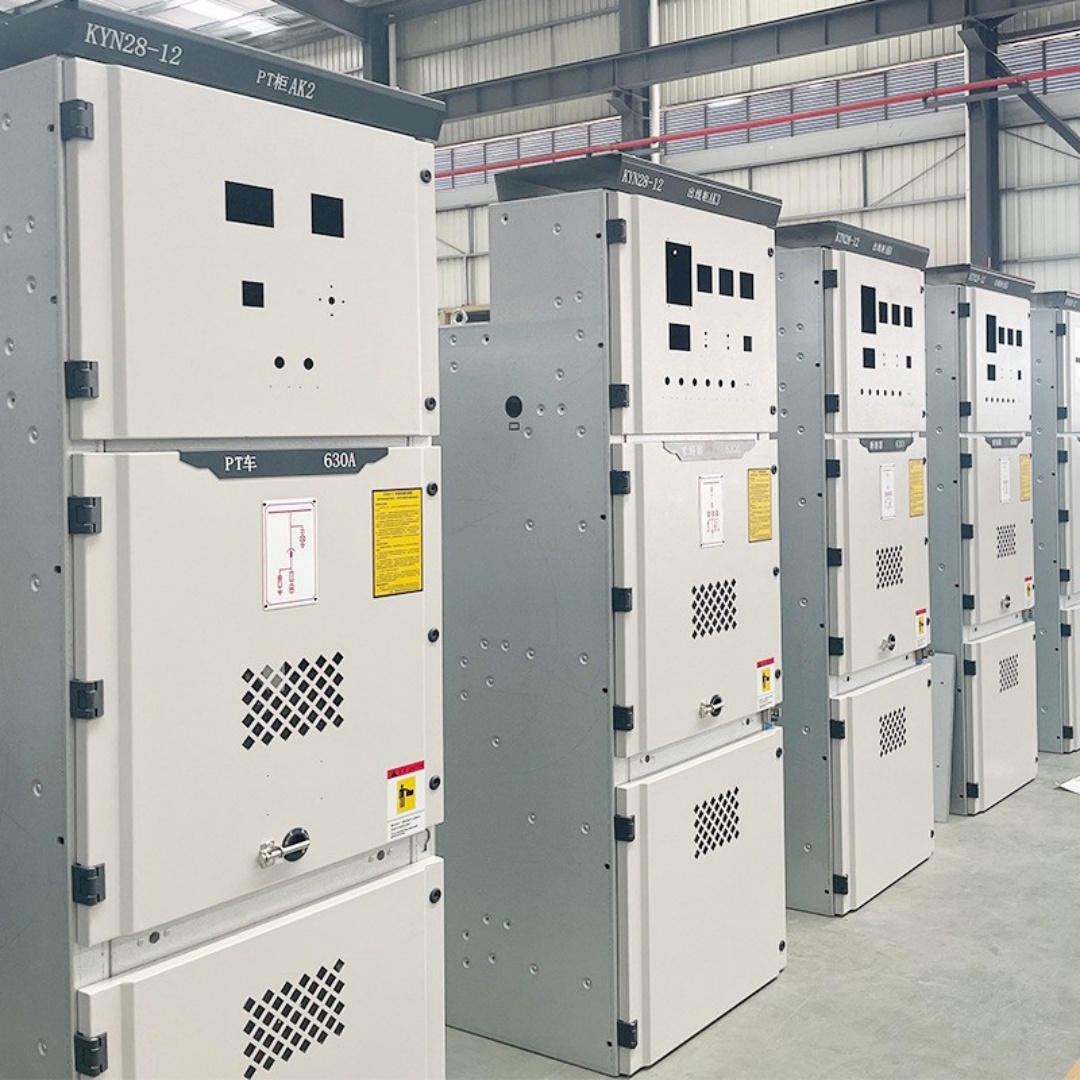
The company's portfolio covers energy storage equipment, transformers, power distribution cabinets, busbars, motor-related components and other electrical hardware.
In heavy electrical equipment, Rivers has practical application experience with transformer manufacturers and power-equipment companies, including solutions for difficult-to-coat structures such as fin-type transformer radiators.
In new-energy applications, the emphasis increasingly shifts toward combining traditional powder coating advantages—low VOC emissions, material utilization and industrial productivity—with functional properties such as insulation and flame retardancy.
This combination creates opportunities for manufacturers seeking to simplify coating processes while improving component performance.
Selecting the Right Functional Coating
There is no single “energy storage powder coating.”
A cabinet installed outdoors, an insulated copper busbar and a battery-related component may all require completely different formulations.
For this reason, Rivers recommends defining the application before selecting the product.
Useful information includes substrate material, component geometry, required dielectric voltage, coating thickness, flame-retardant requirement, corrosion environment, operating temperature, curing limitations and relevant customer or industry standards.
Once these parameters are understood, the coating system can be developed and validated accordingly.
For B2B customers and distributors, this technical approach also reduces the risk of selling a generic powder into a safety-critical application where the real requirements are much more complex.
Call to Action
Developing an energy storage, busbar, transformer or electrical-equipment project? Contact Rivers Powder Coatings with your insulation, corrosion, flame-retardant and application requirements. We can support product selection, customized samples, TDS/SDS, test documentation, quotations and coating-line technical evaluation.

Rivers (Qianjiang) Group
Zhaoqing Qianjiang High-Tech Materials Technology Corporation
Guangdong Huajiang Powder Technology Co., Ltd.
Shandong Qianjiang Powder Technology Co., Ltd.
Guangdong Wesdon Rivers Powder Paints Scientifc Research Co., Ltd.
Zhaoqing Qianjiang Coating Co., Ltd.
Zhuhai Zhengdong Chemicals Co., Ltd.
Zhongshan Yonghan Industrial Additives Co., Ltd.
Guangdong Honglang Technology Co., Ltd.
WhatsApp:+86 150 1171 7323
Mail:global@riversqj.com
Address:
Guangdong Huajiang Powder Technology Co., Ltd.
No. 27 Jianshe Road, Dawang High tech Zone, Zhaoqing, Guangdong Province


